· · Gabriel CA
Why Your Notes App Shouldn't Be Training AI on Your Data
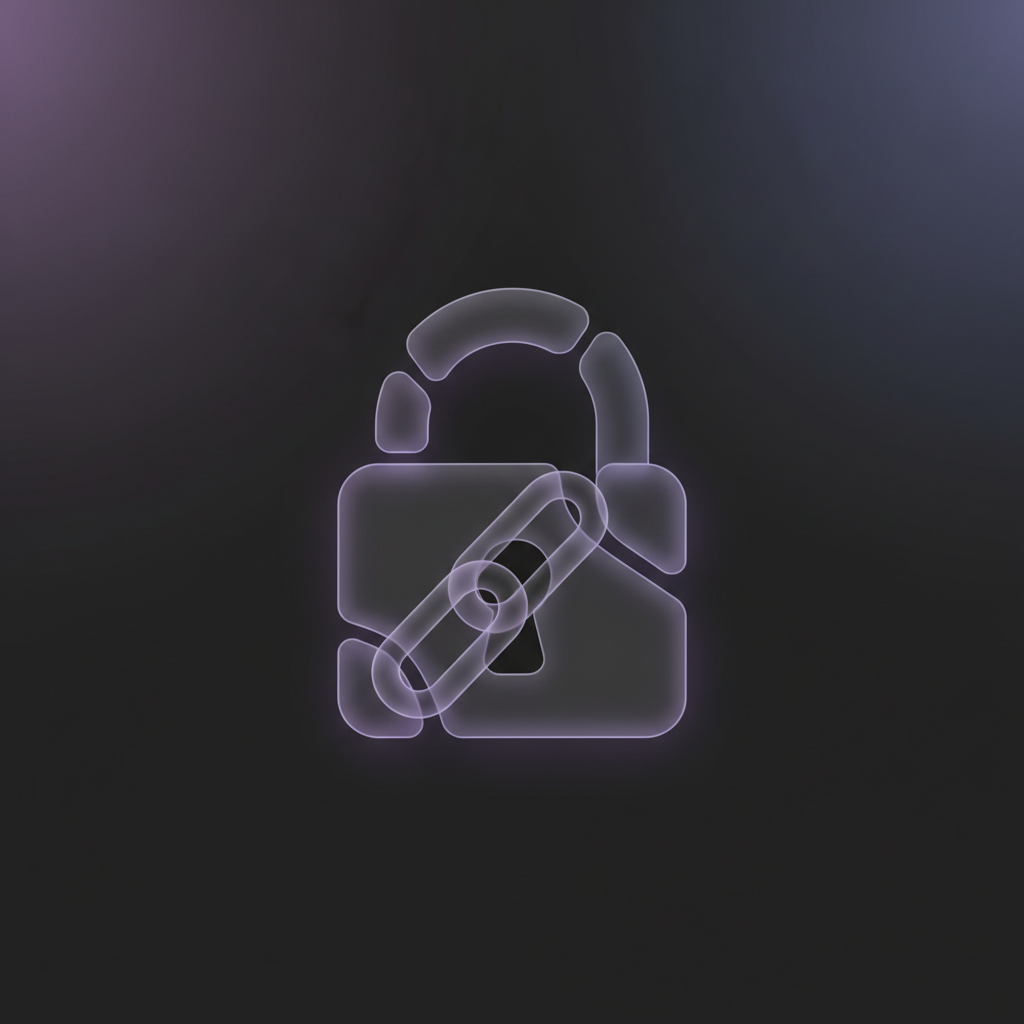
A notes app without AI training uses client-side encryption (zero-knowledge) to ensure your data is never readable by the provider. By encrypting notes with AES-256-GCM and Argon2id before they reach the server, these apps physically prevent your content from being ingested into LLM training sets or generative AI models.
In 2026, the distinction between a productivity tool and a data source has blurred. As large language models (LLMs) require increasingly vast amounts of human generated text to improve, the private thoughts, journals, and strategy documents stored in digital notebooks have become prime targets for ingestion. Finding a notes app without AI training is no longer just about avoiding unwanted features · it is about ensuring your intellectual property and personal reflections remain yours.
The current market has shifted toward "thinking partners" rather than simple storage. While some users appreciate AI summaries, many professionals and privacy conscious individuals are realizing that if a provider can summarize your note, they can read it. To truly opt out of the machine learning cycle, you must look beyond simple toggle switches in a settings menu.
Why Is My Notes App Using My Data to Train AI?
Most cloud based note apps operate on a service model where your data is stored in plain text or encrypted with keys held by the provider. This architecture allows the company to run server side processes on your content. In 2026, those processes frequently include training proprietary models or fine tuning third party LLMs.
Companies justify this by claiming it improves the user experience through features like auto tagging, smart summaries, or generative writing. However, the underlying reality is that human data is the most valuable commodity in the AI era. When you use a "free" or centralized service, your data often becomes part of the training set unless you explicitly opt out · and even then, the technical ability for the provider to access your data remains a permanent security risk.
Can I Opt Out of AI Training in Notion or Evernote?
Many popular platforms have introduced AI features that are enabled by default. While these companies often provide settings to disable generative AI tools, the fundamental architecture of the apps usually remains "cloud readable."
The Notion Approach
Notion has integrated AI deeply into its workspace. While they state that they do not use customer data to train their models by default for certain enterprise tiers, the data still resides on their servers in a format their systems can process. For users seeking a Notion alternative without AI, the concern is often less about the specific AI features and more about the lack of client-side encryption.
The Evernote and Google Keep Model
Google Keep remains a "barebones" option where notes appear as "colourful cards you can pin, label, and turn into checklists" (Tech Insider, 2026). However, as a Google product, it is integrated into an ecosystem where data scanning for various purposes is a core part of the business model. Similarly, Evernote has transitioned through various ownership changes, but it has not moved toward a zero knowledge architecture. If you are looking for a SimplyBoard vs Evernote private alternative, the primary difference is who holds the keys to your data.
What Is a Zero Knowledge Notes App?
A zero knowledge (or client side encrypted) notes app is the only definitive way to ensure your data is not used for AI training. In this model, your notes are encrypted on your device before they ever reach the server. The service provider never sees the content of your notes, which means they physically cannot feed your data into a training algorithm.
Standard encryption (AES-256) is used, but the critical factor is the key management. In a zero knowledge system, the key is derived from your password on your local machine. If the company is subpoenaed or their servers are breached, the attacker only finds useless gibberish. This is the gold standard for personal knowledge management in an age of pervasive AI.
How Does Client Side Encryption Block AI Scraping?
When an app uses client side encryption, the "handshake" between your device and the server looks like this:
- You type a note in your browser or app.
- The app uses a memory hard function like Argon2id to turn your password into an encryption key.
- The note is encrypted using AES-256-GCM.
- The encrypted "blob" is sent to the server.
- The server stores the blob but has no way to decrypt it.
Because the server never sees the plain text, it cannot run an AI indexing bot over your notes. It cannot "summarize" them, and it cannot use them to teach a model how to write like you. This is why zero knowledge notes are the only logical choice for users who prioritize privacy.
Is Local Only Storage Better Than the Cloud for AI Privacy?
Some users turn to "local only" apps like Obsidian to avoid AI training. While this is effective, it often sacrifices the convenience of cross device sync. If you use a local app but then sync it via a non encrypted cloud service (like standard Dropbox or iCloud), you may be re introducing the very risk you tried to avoid.
The middle ground is an offline-first, encrypted-sync architecture. This allows you to have the speed of a local app with the reliability of a cloud backup, without giving the cloud provider access to your thoughts. Apps that use an encrypted IndexedDB cache allow you to search and edit your notes without an internet connection, syncing the encrypted changes only when you are back online.
Why Should I Avoid "AI-First" Note Apps?
The market is currently split into "capture-first" apps and "AI-first" thinking partners. As Storyflow (2026) notes, "A note app without AI looks like a filing cabinet. A note app with AI looks like a thinking partner." While the "thinking partner" sounds appealing, it introduces a "Privacy Tax."
- Data Leakage: Every prompt you send to an AI assistant is potentially recorded.
- Model Collapse: If everyone uses AI to write their notes, the models eventually train on AI generated garbage, leading to lower quality outputs.
- Dependency: You become dependent on a proprietary algorithm to organize your own thoughts.
By choosing a notes app for privacy, you retain the ability to think for yourself. You can still use Markdown for structure and instant search for retrieval without needing a machine to tell you what your notes mean.
How to Verify if an App Is Actually Private?
Do not trust marketing copy that simply says "secure" or "encrypted." Look for these specific technical markers:
- Argon2id: This is the current industry standard for key derivation. It is designed to be resistant to GPU based cracking attacks.
- AES-256-GCM: The standard for high grade symmetric encryption.
- No Server Side Password Reset: If a company can reset your password and give you back your data, they have the ability to read your data. A true private app will offer a one-time recovery code instead.
- SOC 2 and ISO 27001: These certifications ensure the infrastructure hosting the encrypted data meets rigorous global security standards.
Why SimplyBoard Is the Choice for AI-Free Note Taking
SimplyBoard was built on the principle that your notes should be a private extension of your mind, not a dataset for someone else's product. It is a fast, private alternative to Notion and other platforms that have pivoted toward AI.
Every entry in SimplyBoard is encrypted in your browser using AES-256-GCM before it ever hits the server. We use Argon2id for key derivation, ensuring that even we cannot read your notes. There is no AI training, no data scraping, and no server side processing of your content. It is a keyboard-first and offline-first experience designed for people who need to ship, not for people who want their notes to be read by a machine.
Whether you are managing a private kanban board or building a complex knowledge base, your data remains yours. You can export your content as plain text or Markdown at any time, ensuring you are never locked into a system that might change its privacy policy tomorrow.
Summary of the Best Practices for Note Privacy in 2026
To keep your data out of AI training sets, follow these rules:
- Use apps with client-side encryption by default.
- Avoid apps that require you to "opt out" of data sharing · choose "opt in" or "zero access" by design.
- Prioritize apps that work offline-first to minimize data exposure.
- Use strong, unique passwords and store your recovery codes safely.
- Regularly export your data to open formats like Markdown to maintain data sovereignty.
The era of "free" software at the cost of your privacy is ending. By choosing tools that respect your boundaries, you ensure that your creative and professional work remains your own.
Frequently asked questions
Can I opt out of AI training in Notion or Evernote?
Yes, but opting out of AI features does not always mean your data is not stored in a format that the provider can access. To ensure your data is never used for training, you should use a notes app with client-side encryption where the provider lacks the keys to read your content.
What is a zero-knowledge notes app?
A zero-knowledge notes app encrypts your data on your device using a key derived from your password. Because the encryption happens before the data is uploaded, the service provider only hosts encrypted 'blobs' and cannot read, scan, or use your notes for AI training or any other purpose.
How do I know if an app is actually private?
Look for technical specifications like AES-256-GCM encryption and Argon2id for key derivation. A key indicator of true privacy is the lack of a server-side password reset; if the company can recover your data for you, they have the technical ability to read it.
Is local storage better than cloud storage for AI privacy?
Local-only apps are excellent for privacy, but they often lack seamless cross-device synchronization. An offline-first app with client-side encrypted sync offers the best of both worlds: the speed and privacy of a local app with the convenience of secure cloud backups.
Why is Argon2id important for note security?
Argon2id is a memory-hard password hashing function used to derive encryption keys. It is specifically designed to resist brute-force attacks from powerful hardware like GPUs, making it the gold standard for securing the keys that protect your private notes.
Does SimplyBoard use my notes for AI training?
SimplyBoard uses zero-knowledge, client-side encryption (AES-256-GCM) and does not have access to your decryption keys. This architecture makes it technically impossible for SimplyBoard to read your notes or use them for AI training, providing a secure alternative to mainstream cloud notebooks.